Quick Answer
Randwick is usually best viewed as a premium, highly livable Eastern Suburbs suburb rather than a value entry market. For owner-occupiers, it offers a strong blend of convenience, beach access, medical precinct proximity, and day-to-day amenity; for investors, it can attract broad tenant demand, but the asset selection has to be disciplined because entry costs and holding costs can be material. The best results typically come from choosing the right property type, street, and building quality, not just relying on the suburb name.
Key Takeaways
- Randwick tends to suit buyers who value established amenity, convenience, and long-term liveability over bargain entry pricing.
- Demand is supported by multiple buyer groups, including owner-occupiers, families, professionals, and renters linked to nearby health and education hubs.
- Apartments are often the practical entry point, while houses and character stock usually appeal more to long-term lifestyle buyers.
- For investors, layout, strata health, light, and location within the suburb can matter more than broad suburb headlines.
- Randwick can be a strong hold suburb, but buyers should compare like-for-like assets and verify current market evidence carefully.
Pros & Cons
Pros
- Established Eastern Suburbs address with enduring lifestyle appeal.
- Broad tenant pool supported by transport, hospitals, education, and nearby beaches.
- Varied stock allows different strategies, from apartments to character homes.
Cons
- Premium pricing can make entry difficult for some buyers.
- Older buildings may bring strata, maintenance, or renovation risk.
- Some pockets can be traffic-noisy or less private than buyers expect.
Market Overview
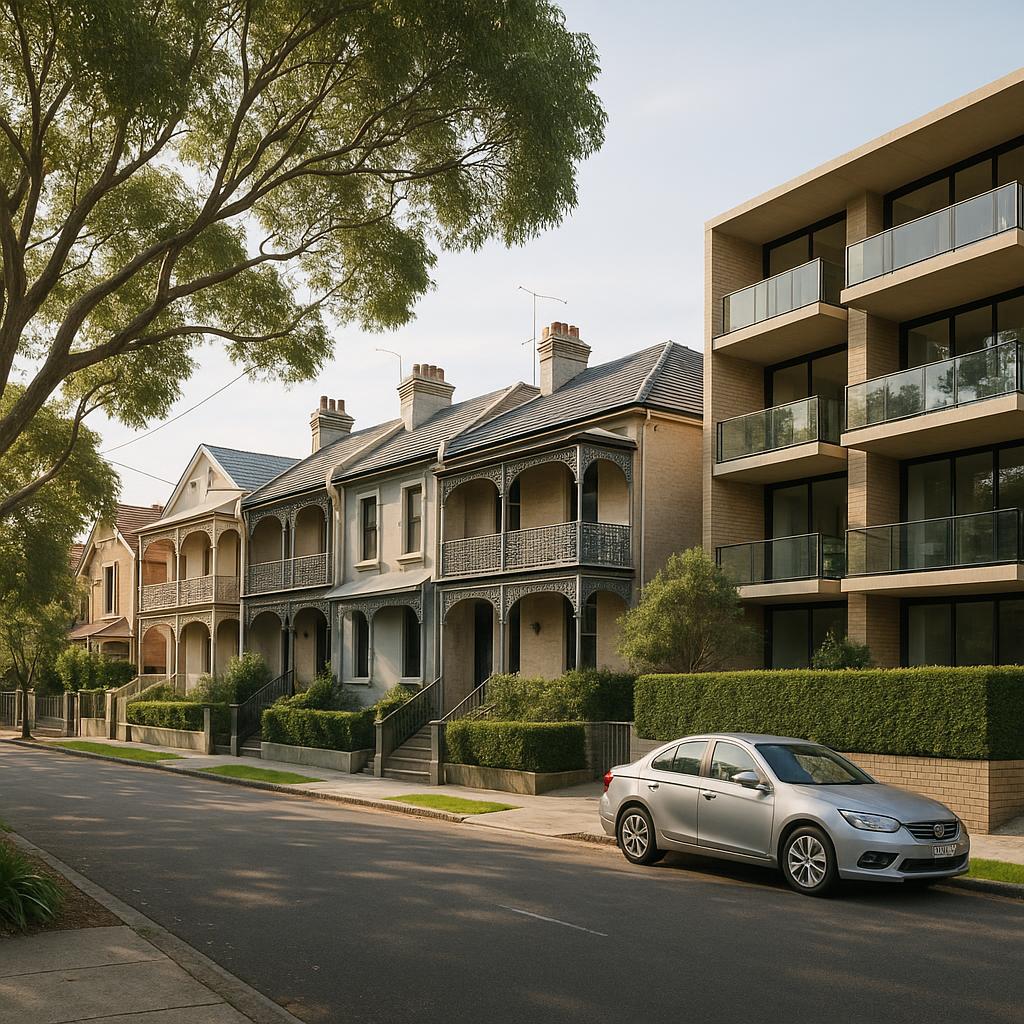
Randwick sits in Sydney’s Eastern Suburbs and is known for a mix of convenience, prestige, and everyday liveability. That combination matters: buyers are often choosing between apartment convenience, character housing, townhouse-style practicality, and renovation potential, rather than a single dominant stock type. Proximity to Coogee, Kensington, Kingsford, major medical infrastructure, and education precincts helps keep the suburb relevant across market cycles.
The market is best understood as supply-constrained and demand-diverse. Limited land availability generally supports scarcity value over time, while the local appeal extends beyond one buyer segment. That usually helps liquidity, but it does not remove asset-level risk. A well-located, well-presented property with a practical floorplan will usually compete very differently from a dated or awkward one, even if both share the same postcode.
For buyers, the most useful lens is not “Is Randwick good?” but “Which Randwick property fits my goal?” An owner-occupier may prioritise a quieter street, outdoor space, and walkability. An investor may focus on strata health, tenant appeal, and low-maintenance livability. That distinction is where many decisions are won or lost.
Buyer Demand
Randwick attracts a broad mix of demand: owner-occupiers seeking a long-term lifestyle base, families wanting practical access to amenities, professionals wanting strong city connectivity, and investors targeting rental depth from nearby employment and education nodes. That mix is helpful because it can reduce reliance on a single buyer profile.
Competition is often strongest for move-in-ready properties with light, parking, storage, and a sensible layout. Buyers should assume the suburb premium is real, but not automatic: a good building on a quieter street can outperform a more “prestigious” address if the lived experience is better. In a suburb like Randwick, the asset’s quality often determines who shows up at resale.
Rental Market
Randwick’s rental appeal is supported by a diverse tenant base, including hospital staff, medical professionals, students, academics, young couples, and small families. That diversity can be an advantage for investors because it spreads demand across different life stages and employment links, rather than relying on a single tenant type.
Tenants usually respond to practical features: easy transport access, secure low-maintenance living, a functional floorplan, good natural light, and decent storage. In this suburb, a property that is well-kept and logically configured often leases more easily than one that simply carries a strong postcode. Investors should verify current asking rents and vacancy conditions using live listings before relying on any generic estimate.
Lifestyle, Transport & Schools
Randwick’s lifestyle appeal comes from the balance of coastal proximity, everyday convenience, and a settled residential feel. That matters because many buyers want the benefits of the Eastern Suburbs without being in the most hectic or tourist-driven pockets. Access to beaches, parks, cafes, medical services, and local shopping supports both owner-occupier satisfaction and tenant interest.
Transport is a major part of the suburb’s value proposition. Reliable public transport access expands the tenant pool and improves daily usability for owners who commute or travel frequently. Buyers should verify route options, stop proximity, and travel times using current transport information, because small location differences within Randwick can change daily convenience materially.
For school access, families should rely on official catchment and enrolment checks rather than informal assumptions. Education demand can be a genuine support to the market, but zoning and catchments are specific to the property, not the suburb generally. If you are buying for schools, confirm the exact address against current official boundaries before committing.
Randwick Suburb Profile
Official 2021 Census snapshot for the ABS Suburbs and Localities geography.
Age profile
Housing tenure
Occupied private dwellings by tenure type.
Salary & income profile
Median total income reported in the Census.
*Annual figures are weekly median × 52 estimates, not separate ABS annual medians.
Education & qualifications
Highest educational attainment, people aged 15+.
Employment status
People aged 15+ who reported being in the labour force.
Industry of employment
Top responses among employed people aged 15 years and over.
Occupation profile
Broad occupation groups among employed residents, including managers.
Property Type Guide
- Apartments: Often the most accessible entry point; check strata reports, building condition, light, ventilation, parking, and lift/security arrangements.
- Houses: Best for long-term owner-occupiers and families; assess renovation scope, structural condition, outdoor usability, and planning constraints.
- Townhouses and semis: A middle ground for buyers wanting more privacy than an apartment without the upkeep of a detached house.
- Renovators: Can create value if the budget, timeline, and approvals are realistic; older stock needs careful inspection and cost control.
- Turnkey properties: Suit buyers prioritising convenience, reduced immediate risk, and easier leasing or occupation.
Risks & Watch-Outs
- Do not assume every pocket of Randwick behaves the same; street position, noise exposure, and building quality can alter outcomes significantly.
- Older apartments can hide maintenance issues, weak sinking funds, or poor strata governance, so review documents before you fall in love with the location.
- Premium suburb reputation can tempt buyers into overpaying for an inferior asset with awkward layout, limited light, or poor liveability.
- Renovation risk is real in older homes, especially where structural work, moisture issues, or approval requirements are involved.
- Investors should avoid buying on postcode alone; a hard-to-lease property can underperform even in a strong suburb.
Nearby Suburbs to Compare
- Bondi Beach NSW Property Market Guide: Buyers & Investors
- Coogee
- Kensington
- Kingsford
- Maroubra
FAQ
Is Randwick a good suburb for first-home buyers?
It can be, especially if you are open to an apartment rather than a house. The key trade-off is paying for convenience, amenity, and location quality, so first-home buyers should focus on the best asset they can comfortably hold.
Is Randwick good for investors?
Yes, but only if the property stacks up on fundamentals. Randwick can offer broad rental demand, but investor outcomes depend on strata quality, layout, maintenance, and location within the suburb, not just the postcode or the building age.
What type of property is best in Randwick?
That depends on your goal. Apartments often suit investors and entry buyers, while houses and semis are usually better for families and long-term owner-occupiers. Always compare liveability, holding costs, and resale depth before choosing.
Is Randwick better for families or professionals?
Both can do well there. Families often value access to parks, schools, and residential streets, while professionals may prioritise transport, medical precinct proximity, and low-maintenance housing. The best fit depends on property type and micro-location.
What should buyers inspect most carefully?
Focus on strata records, building condition, natural light, ventilation, noise, access, and parking. For houses, look closely at structure, renovations, and future maintenance. A strong suburb cannot fully rescue a weak asset.
Conclusion
Randwick is a strong example of why suburb reputation alone is not enough. The suburb offers enduring lifestyle appeal, broad demand, and useful transport and amenity access, but the best purchase still depends on choosing the right property type and the right pocket. Buyers and investors who verify the asset properly are more likely to make a sound long-term decision.
Sources & How to Verify
- Check current transport routes, stop locations, and service changes on Transport for NSW so you are not relying on outdated travel assumptions.
- Review official school catchments and enrolment guidance on NSW School Finder before assuming a property is in-zone for a particular school.
- Use Randwick City Council to confirm local planning controls, development context, and area-specific council information.
- Inspect current planning proposals and zoning context through the NSW Planning Portal before assessing renovation or redevelopment potential.
- Compare live sale evidence and rental listings on Domain to verify what similar properties are actually transacting or leasing for right now.
- Cross-check recent comparable sales on realestate.com.au so you can compare property type, land component, and building condition more accurately.
- For demographic context, use ABS Census data and make sure you are reading the most recent available release for the suburb or surrounding area.
- If a property is in a strata scheme, request the records and verify levies, maintenance history, and building issues directly through the strata report and owners corporation documents.