Quick Answer
Wollongong suits buyers and investors who want a coastal city with real urban function, not just lifestyle branding. It can work well for first-home buyers, upsizers, commuters, lifestyle buyers, and investors who value tenant depth and long-term liquidity. The key is to match the micro-location and property type to your goal: convenience, family space, low-maintenance ownership, or rental resilience. Start with budget, then compare access, strata or maintenance risk, and likely resale audience.
Define your budget and borrowing power, then choose between beachside, city-fringe, family, unit-heavy, or outer-suburb options. Check rental demand, transport access, and ownership costs before you make an offer.
- What makes Wollongong attractive: coastal amenity, a broad employment base, rail access, and a diverse housing mix.
- Main trade-offs to consider: stronger demand pockets can be more competitive, and some sites need extra due diligence for slope, flooding, or strata.
- Best way to approach the market: narrow by property type first, then compare streets, access, and ongoing costs before focusing on finish level.
Key Takeaways
- Wollongong offers lifestyle depth and practical city functions, which helps support both owner-occupier and investor demand.
- Different pockets behave differently, so micro-location matters more than relying on a broad suburb label alone.
- Units and townhouses can suit convenience-led buyers, while houses often better suit families needing space and storage.
- Investor success usually depends on tenant profile, strata exposure, and ongoing maintenance rather than just postcode appeal.
- The safest strategy is to compare access, property type, and ownership costs before chasing views, renovations, or beach proximity.
Pros
- Coastal city lifestyle with beaches, dining, recreation, and everyday services.
- Broad buyer and tenant base across professionals, families, students, and downsizers.
- Varied housing stock allows different entry points and investment strategies.
Cons
- Some tightly held pockets can be competitive and require fast, disciplined decision-making.
- Coastal, steep, or low-lying sites may need extra checks for drainage, access, and insurance.
- Strata properties can bring levies, building issues, and management complexity.
Market Overview
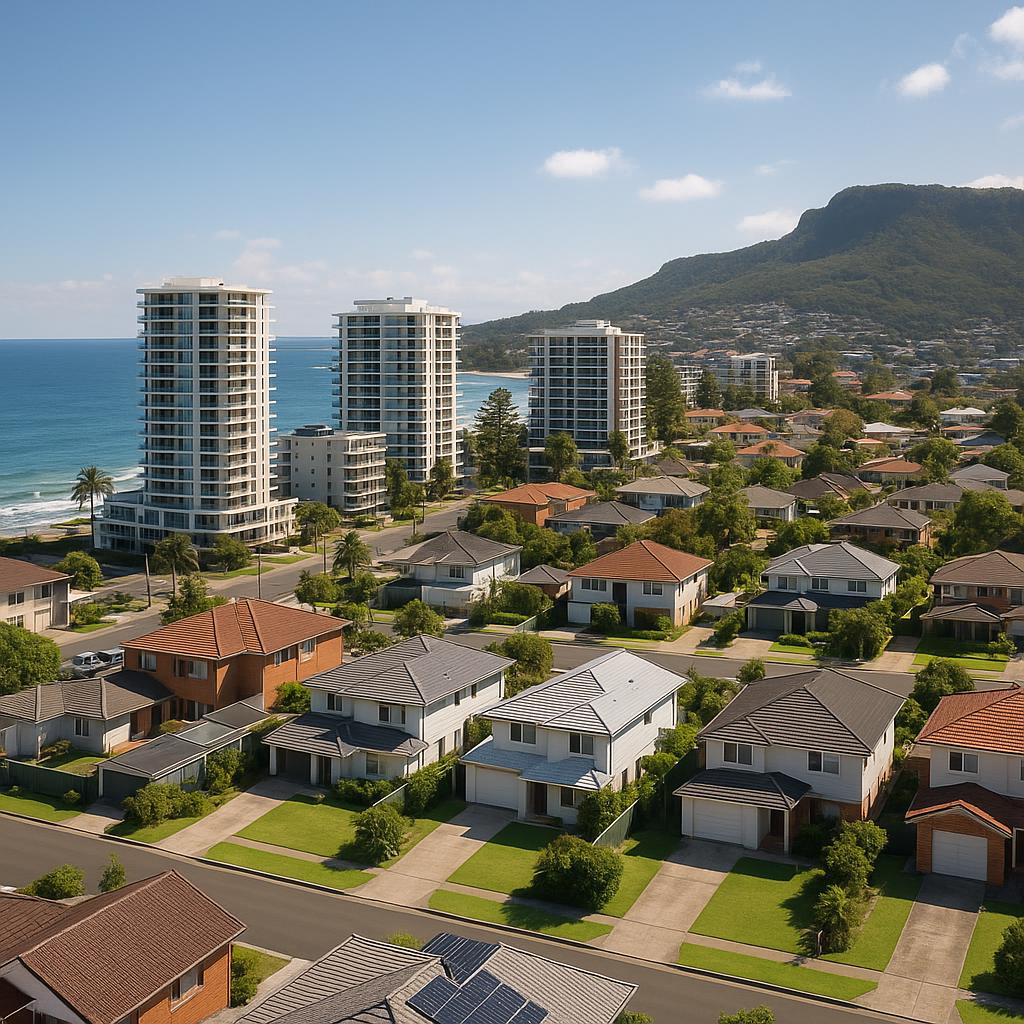
Wollongong is best understood as a collection of micro-markets rather than one uniform city market. It combines beach-adjacent apartments, older detached homes, townhouse pockets, and newer infill stock, with demand shaped by access to the CBD, rail, education, health services, and the coast.
That mix matters because different buyers are chasing different outcomes. A city-fringe apartment may suit a commuter or tenant who values convenience, while a family home inland may appeal to buyers who prioritise space, parking, and day-to-day practicality over immediate beach access.
For investors and homeowners, the key question is not simply “Is Wollongong good?” but “Which part of Wollongong suits my budget, risk tolerance, and exit strategy?” The right answer depends on whether you want low-maintenance ownership, strong lifestyle appeal, or a broader resale audience.
Buyer Demand
Demand in Wollongong is usually driven by a mix of first-home buyers, upsizers, downsizers, commuters, and investors. That creates competition for properties that are well located, easy to maintain, and suited to everyday living rather than just cosmetic appeal.
As a general rule, properties that offer practical layouts, parking, transport access, and a clear buyer story tend to hold broader appeal. A renovated unit near amenities may attract time-poor professionals, while a detached home with usable outdoor space may appeal more to families planning to stay longer.
Rental Market
The rental market is supported by a varied tenant pool, including students, healthcare workers, young professionals, commuters, couples, and families. That diversity can help reduce reliance on one tenant type, but the best-performing asset still depends on location, presentation, and maintenance profile.
For investors, convenient units and well-kept low-maintenance homes often make the most sense near employment, transport, and education hubs. A good rental is not always the best lifestyle home: tenants often prioritise access, parking, and easy upkeep more than the buyer who wants a larger yard or a premium outlook.
Lifestyle, Transport & Schools
Wollongong’s lifestyle appeal comes from the coastal setting, local dining, parks, beaches, walking routes, and access to recreation without losing the benefits of a functioning city. That is a major reason many buyers stay focused on the area even when price or competition pushes them to compare nearby suburbs.
Transport access matters because it widens the buyer and tenant pool. Rail and road connectivity influence how attractive a property is to commuters, while parking, station proximity, and ease of daily travel can be just as important as the beach itself.
School access also shapes demand, even for buyers without children, because family-oriented buyers often prioritise education options and predictable routines. The practical takeaway is simple: a property that works for school runs, commuting, and weekday logistics usually has stronger long-term demand than one that only performs on weekends.
Wollongong Suburb Profile
Official 2021 Census snapshot for the ABS Suburbs and Localities geography.
Age profile
Housing tenure
Occupied private dwellings by tenure type.
Salary & income profile
Median total income reported in the Census.
*Annual figures are weekly median × 52 estimates, not separate ABS annual medians.
Education & qualifications
Highest educational attainment, people aged 15+.
Employment status
People aged 15+ who reported being in the labour force.
Industry of employment
Top responses among employed people aged 15 years and over.
Occupation profile
Broad occupation groups among employed residents, including managers.
Property Type Guide
- Apartments/units: Often suit first-home buyers, downsizers, and investors who want lower maintenance and stronger convenience appeal. Check strata health carefully.
- Townhouses/villas: A middle-ground choice for buyers wanting some space without full-house upkeep. Useful where land content is less important than usability.
- Detached houses: Better for families, land value, privacy, and future renovation flexibility. Expect higher maintenance, insurance, and capital outlay.
- Older homes: Can offer character and renovation upside, but hidden costs may sit in plumbing, wiring, moisture, or compliance issues.
- Newer stock: Usually easier to occupy or lease, though buyers should still assess build quality, developer reputation, and strata exposure.
Risks & Watch-Outs
- Check for flood exposure, drainage issues, and low-lying land, especially where the site has strong lifestyle appeal but weaker physical resilience.
- Inspect steep blocks, retaining walls, driveway gradients, and access because these can reduce liveability and increase maintenance costs.
- Review strata records carefully, including sinking fund health, special levies, defect history, and upcoming major works.
- Do not rely on presentation alone; a well-styled property can still have hidden structural, moisture, or compliance problems.
- Avoid overpaying for view, beach, or renovation premiums if the surrounding streetscape, parking, or access is less functional.
Nearby Suburbs to Compare
- North Wollongong for stronger beach and transport convenience in a tightly held setting.
- Fairy Meadow for mixed housing, practical access, and a broad range of buyer profiles.
- Shellharbour for a different balance of affordability, lifestyle, and family-oriented housing stock.
- Kiama for buyers comparing coastal lifestyle premium versus city convenience.
- Albion Park for those weighing larger homes and broader value options away from the immediate coast.
FAQ
Is Wollongong better for buyers or investors?
It can suit both, but for different reasons. Buyers often value the lifestyle and convenience mix, while investors focus on tenant depth, low-maintenance assets, and micro-location. The better choice depends on whether you need personal liveability, rental resilience, or both.
Which property type usually suits Wollongong best?
There is no single best type. Units and townhouses often suit convenience-focused buyers and investors, while detached houses are usually better for families who need space, storage, and a longer ownership horizon. Choose based on use, not trend.
What should first-home buyers prioritise in Wollongong?
Prioritise borrowing capacity, ownership costs, and day-to-day practicality before chasing premium views or finish. A smaller property in a better location can be a smarter entry point than a larger place with weaker access or higher ongoing costs.
What do investors need to check before buying a unit?
Investors should review strata reports, insurance arrangements, building condition, likely levies, and tenant demand in that exact pocket. A well-located unit can be strong, but only if the complex is financially sound and easy to manage.
How important are transport links and school access?
Very important. They shape both owner-occupier and tenant demand, and they often determine how broad your resale market will be. Even buyers without children can benefit from choosing areas with strong school access and practical commuting options.
Conclusion
Wollongong rewards buyers who think clearly about micro-location, property type, and ownership costs. It is a market where lifestyle and practicality intersect, so the strongest purchase is usually the one that fits how you live, rent, or plan to exit later. Compare options carefully, verify the risks, and buy for the buyer you will eventually sell to.
Sources & how to verify
- Check current sales evidence on Domain so you can compare real asking and sold patterns in the exact pocket you are targeting.
- Review recent rental listings on realestate.com.au to verify tenant demand, rent positioning, and how quickly comparable homes are being advertised.
- Use the NSW Planning Portal to check zoning, development controls, and any nearby proposals that could affect amenity or future supply.
- Confirm school options and catchment-related details with the NSW School Finder rather than relying on informal maps or outdated forum posts.
- Check transport changes and station/service information on Transport for NSW before you assume commute times or service frequency.
- Review local place and community context through the Wollongong City Council website, especially for flood, planning, and infrastructure matters.
- Use ABS community data on ABS to understand broad household and demographic trends, but avoid using it as a substitute for current property-level research.
- Always confirm strata, building, drainage, and site-specific issues with inspections and reports, because online research cannot replace a proper due diligence process.