Quick Answer
Noosaville is a premium lifestyle suburb with broad appeal to owner-occupiers, downsizers, and investors who value convenience, river access, and long-term desirability over bargain pricing. It tends to reward well-located, well-presented properties rather than speculative purchases. For buyers, the key is matching the property type and street position to your intended use: live in it, rent it, or use it as a flexible low-maintenance base. Due diligence matters, especially on flood exposure, strata terms, parking, and letting rules.
Key Takeaways
- Noosaville’s strength is its mix of lifestyle amenity, practical convenience, and a buyer pool that extends beyond holiday demand.
- Suburb performance is usually driven more by property quality, position, and usability than by flashy features alone.
- Apartments and townhouses suit low-maintenance living, while houses and duplexes offer more flexibility and longer-term owner appeal.
- Investors should assess tenant demand, ongoing costs, body corporate rules, and the property’s day-to-day manageability together.
- Buyers comparing Noosaville with nearby suburbs should focus on use case: river convenience, beach lifestyle, or quieter residential value.
Pros & Cons
Pros
- Strong lifestyle appeal with everyday convenience and water-adjacent amenity
- Broad demand profile supports owner-occupiers, downsizers, and investors
- Many properties suit low-maintenance ownership and easy resale positioning
Cons
- Quality stock can be tightly contested, especially in better-positioned pockets
- Premium locations often come with premium expectations on condition and price
- Some properties need careful checks for flood, strata, parking, or letting constraints
Market Overview
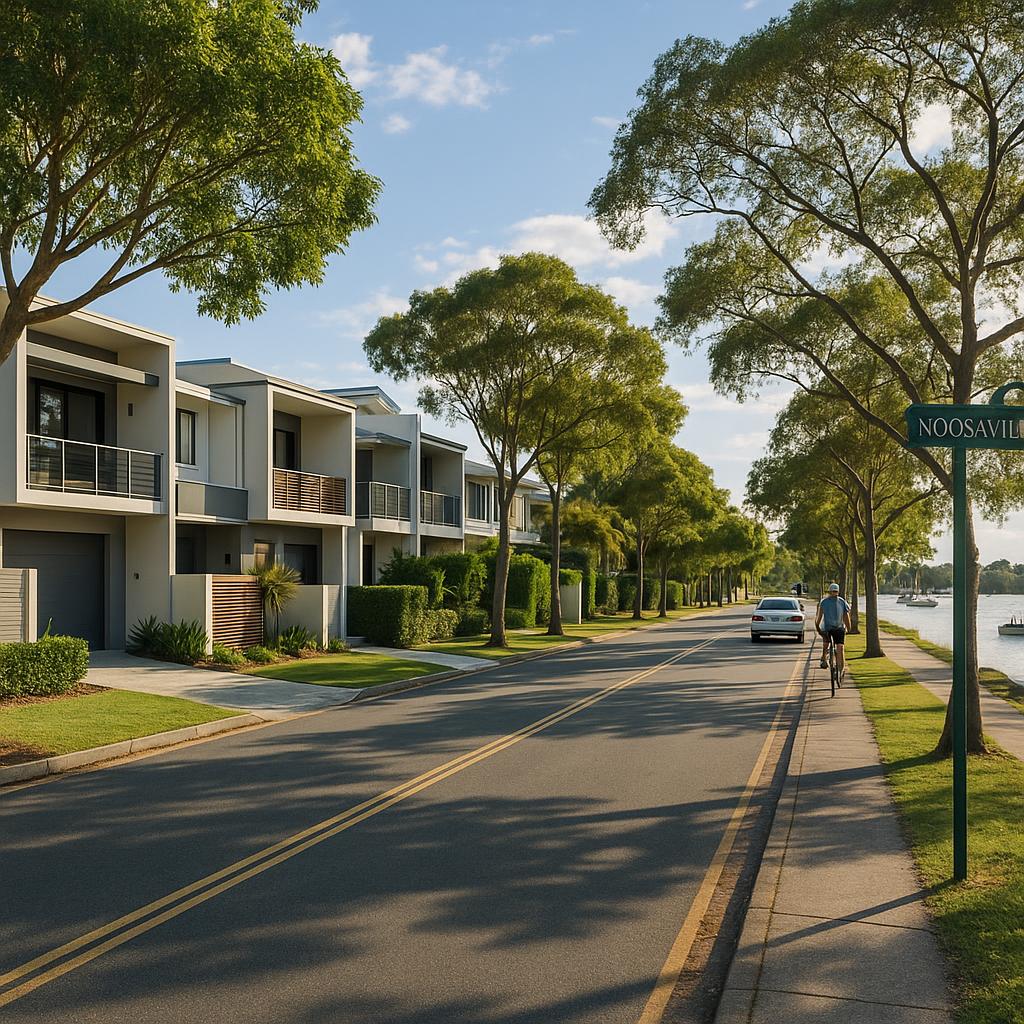
Noosaville is one of the Noosa region’s most practical lifestyle suburbs, combining river access, dining, local services, and a residential feel that still sits close to the area’s high-demand coastal market. It is not just a holiday pocket; it is a genuine living suburb with strong appeal for people who want to enjoy the Noosa area without being in the most intense tourist strip.
That matters because suburbs with multiple demand drivers usually hold up better through market shifts than places reliant on one buyer type. In Noosaville, that mix includes owner-occupiers, retirees, downsizers, and investors seeking low-maintenance holding options. Street-by-street differences are important here: one pocket may feel quiet and residential, while another may trade on walkability, water proximity, or convenience.
For buyers, the most useful question is not whether Noosaville is “good”, but which part of Noosaville fits your brief. A modest but well-located townhouse can be a smarter purchase than a larger home with more maintenance, if your goal is ease of living or consistent tenant appeal.
Buyer Demand
Buyer demand in Noosaville is typically broad because the suburb serves several purposes at once. It attracts people who want a permanent home, those scaling down from larger properties, and buyers who want a low-fuss base near the water and amenities. That breadth gives the suburb resilience, but it also means the best-located stock can be sought after.
For homeowners, the draw is liveability: access, calm streets, and practical convenience. For investors, the appeal is the range of likely tenants, including professionals, couples, and longer-stay residents who prefer amenity over size. In both cases, properties that are easy to maintain and easy to access tend to have the widest audience.
Rental Market
Noosaville’s rental appeal comes from lifestyle and convenience rather than sheer density. The renter base is usually varied enough to support demand across different property types, especially where the home is neat, low-maintenance, and well connected to local amenities. This can help investors who want a property that appeals to stable, longer-term tenants.
That said, investors should not assume every property will rent equally well. A home with awkward parking, older finishes, or high maintenance requirements can be harder to manage and less attractive to tenants who are comparing multiple options. If you are buying for rental performance, verify current asking rents and occupancy signals on current listings rather than relying on general suburb reputation.
Lifestyle, Transport & Schools
Noosaville’s lifestyle advantage is obvious: riverfront recreation, cafes, everyday services, and easy access to the broader Noosa area. For many buyers, that combination is the main reason to pay a premium. It is especially attractive to people who want to walk or drive short distances for most daily needs and enjoy a calmer pace than more tourist-heavy pockets.
Transport is more about practical convenience than major rail or mass-transit access. Buyers should think in terms of parking, road access, and how the street functions at busy times. A property that looks ideal on paper can feel less convenient if visitor parking is limited or the road layout makes day-to-day movements awkward.
Families should check school commute practicality rather than making assumptions based on suburb reputation. Use the school catchment and enrolment information for the specific property, then weigh that against your work and lifestyle needs. In a suburb like Noosaville, liveability often matters as much as education access in the overall purchase decision.
Noosaville Suburb Profile
Official 2021 Census snapshot for the ABS Suburbs and Localities geography.
Age profile
Housing tenure
Occupied private dwellings by tenure type.
Salary & income profile
Median total income reported in the Census.
*Annual figures are weekly median × 52 estimates, not separate ABS annual medians.
Education & qualifications
Highest educational attainment, people aged 15+.
Employment status
People aged 15+ who reported being in the labour force.
Industry of employment
Top responses among employed people aged 15 years and over.
Occupation profile
Broad occupation groups among employed residents, including managers.
Property Type Guide
- Apartments: best for downsizers, lock-and-leave buyers, and investors wanting simpler maintenance; check strata rules, fees, privacy, and noise exposure.
- Townhouses and villas: often a strong middle ground for owner-occupiers and investors; assess layout, storage, parking, and body corporate terms.
- Duplexes and small homes: suit buyers wanting more privacy than apartment living without the upkeep of a large freestanding house.
- Freestanding homes: best for families or long-term owners wanting land and flexibility; inspect drainage, maintenance history, and renovation potential carefully.
- Best-fit rule: choose the property type that matches how you will actually live, maintain, and finance the asset over time.
Risks & Watch-Outs
- Check flood and drainage exposure at the specific address rather than relying on suburb-wide assumptions.
- Read strata documents closely if buying a unit, townhouse, or villa, because rules can affect letting, pets, renovations, and costs.
- Do not overpay for lifestyle appeal alone; premium positioning still needs sound building quality and sensible ownership costs.
- Inspect parking, storage, and street access in person, especially if you plan to live there full-time or attract practical tenants.
- Confirm any short-stay or holiday-letting implications before assuming a property can be used flexibly.
Nearby Suburbs to Compare
- Noosa Heads QLD Property Market Guide: Buyers & Investors
- Tewantin
- Peregian Springs QLD Property Market Guide: Buyers & Investors
- Tewantin
- Mountain Creek QLD Property Market Guide: Buyers & Investors
FAQ
Is Noosaville a good suburb for property investors?
Noosaville can suit investors who want broad tenant appeal and a lower-maintenance style of asset, but it is not a place to buy casually. The strongest opportunities usually come from quality, location, and usability rather than chasing the cheapest entry point.
Is Noosaville better for owner-occupiers or investors?
It works well for both, but many buyers treat it as a lifestyle-first suburb. Owner-occupiers often value walkability and comfort, while investors should focus on manageability, holding costs, and whether the property suits longer-stay tenants.
What property types are most practical in Noosaville?
Apartments, townhouses, villas, and well-positioned smaller homes can all make sense. The practical choice depends on whether you want low upkeep, more privacy, land, or a better balance between lifestyle and rental flexibility.
What should buyers check before purchasing in Noosaville?
Focus on flood exposure, drainage, parking, strata terms, maintenance history, and any letting restrictions. Also check the property at different times of day so you understand traffic, noise, and convenience rather than relying on a quick inspection.
How does Noosaville compare with nearby suburbs?
Compared with Noosa Heads, Noosaville is often more residential and practical. Compared with inland alternatives, it usually offers stronger lifestyle appeal. The right choice depends on whether you want river convenience, beach intensity, or a calmer base.
Conclusion
Noosaville is a strong suburb for buyers who value lifestyle, convenience, and broad demand rather than discount pricing. The best outcomes usually come from matching the property type and street position to your intended use. Whether you are buying to live, rent, or hold long term, detailed due diligence is what turns a good suburb into a good purchase.
Sources & How to Verify
- Check current sales evidence on Domain so you can compare asking prices, sold listings, and the type of stock trading in Noosaville right now.
- Use realestate.com.au to review active rental listings and gauge what tenants are paying attention to in the current market.
- Review property and planning information on the Sunshine Coast Council site to confirm local planning, services, and any relevant overlays or community rules.
- Check flood and hazard information through official local or state mapping tools before buying, because site-specific risk can differ sharply from one street to the next.
- Use ABS data if you want background context on household characteristics, but avoid treating broad demographic data as a substitute for current on-the-ground demand.
- Confirm school zones and enrolment details with the Queensland Government school finder or the relevant school directly, because catchments and enrolment rules can change.
- Ask a local property manager for a current rental appraisal and vacancy commentary so you can test whether a property’s layout and finish level match tenant expectations.