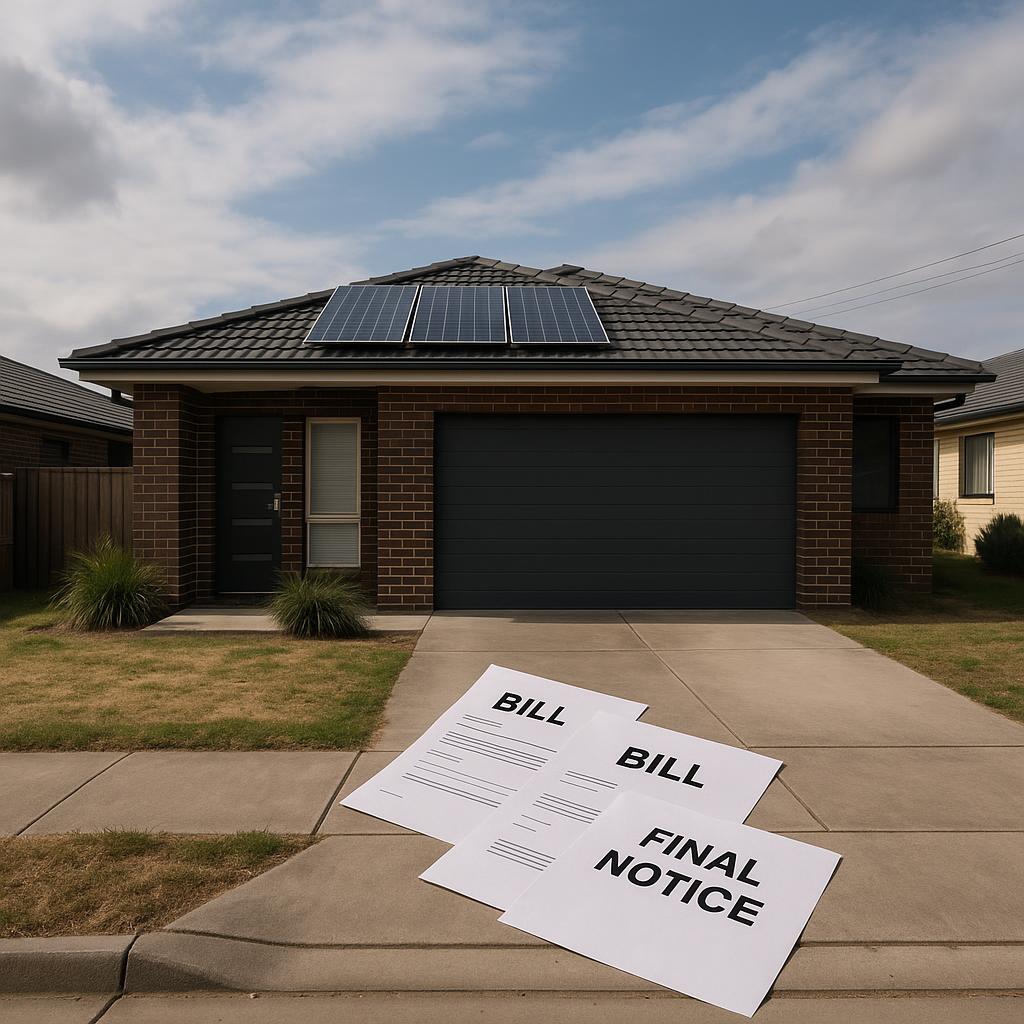
Australian households are facing a tightening squeeze as power bills rise alongside already heavy housing costs, with one report saying some people are cutting back on essentials to keep up with electricity payments. The Daily Telegraph reported on July 15 that Aussies are “ditching doctors” and mortgage repayments to pay power bills, underscoring how cost-of-living pressure is now intersecting directly with housing stress.
At the same time, mortgage advisers are urging greater housing policy stability ahead of the election, according to mpamag.com. Together, the reports point to a market where affordability pressures are no longer confined to buyers trying to get into the market, but are also affecting existing borrowers and renters trying to stay afloat.
Power bills are adding to housing pressure
The Daily Telegraph’s report suggests electricity costs are becoming a serious household budget item, with some Australians reportedly prioritising power bills over other expenses, including mortgage repayments. While the article’s framing is stark, it reflects a broader reality: when essential bills rise, housing costs can become harder to manage even for households that were previously coping.
For mortgage holders, that can mean less room in the budget for repayments, maintenance and other living costs. For renters, higher utility bills can compound already elevated weekly housing outgoings, leaving less flexibility to absorb rent increases or other unexpected expenses.
Mortgage advisers want policy stability
mpamag.com reported that mortgage advisers are calling for housing policy stability ahead of the election. The message is not about one specific measure, but about the need for a clearer and more predictable policy environment while households and lenders navigate affordability pressures.
That call matters because housing policy can affect confidence across the market, from first home buyers weighing up whether to enter, to existing borrowers deciding whether to refinance or hold steady. When policy settings are seen as uncertain, it can be harder for households to plan around repayments, deposits and long-term housing decisions.
Affordability remains the central issue
The common thread across the supplied reports is affordability. Housing costs are not moving in isolation; they are being squeezed by other essentials, especially power bills. That makes the current environment more difficult for households that are already stretched, and it helps explain why housing stress is showing up in different parts of the market at once.
News.com.au’s June 30 report, “Housing gamble claims its first victims,” also points to the risks that can emerge when households take on too much in a difficult market. The headline suggests the consequences of a high-stakes housing environment are already being felt, although the supplied summary does not provide further detail on the cases involved.
What the reports do and do not show
There is a clear warning in the coverage, but also some uncertainty. The Daily Telegraph report highlights household strain in a vivid way, while mpamag.com focuses on policy stability from the perspective of mortgage advisers. Those are different angles on the same broad problem, and the supplied material does not provide a single national dataset tying them together.
That means it is safest to read the reports as evidence of pressure rather than proof of one simple cause. Rising power bills, mortgage costs and broader cost-of-living pressures may all be contributing, but the supplied sources do not quantify how much each factor is driving the stress.
Regional and rental pressure may also be in the mix
Although the supplied sources do not break down the impact by city or region, the pressure described is likely to be felt unevenly. Households with smaller buffers, lower incomes or higher housing costs are generally more exposed when essential bills rise. That can include renters facing repeated increases, as well as mortgage holders who have little spare cash after meeting repayments.
In that sense, the issue is not limited to one segment of the market. It touches buyers trying to enter, owners trying to hold on, and renters trying to keep pace with rising living costs. The reports suggest the housing conversation is increasingly about resilience, not just prices.
What this means for buyers, sellers and renters
For buyers, the combination of housing stress and policy uncertainty may reinforce the need to plan carefully and avoid assuming conditions will improve quickly. For sellers, affordability pressure can affect buyer confidence and the depth of demand, although the supplied sources do not quantify any market-wide effect.
For renters, the main issue is likely to remain budget pressure, especially if utility bills continue to rise alongside rent. For mortgage holders, the reports are a reminder that household cash flow can be strained by more than just repayments. These are broad market observations only, not personal financial advice.
The bigger picture heading into the election
With an election approaching, housing policy is likely to remain under scrutiny, particularly if households continue to feel pressure from both shelter costs and essential bills. The call from mortgage advisers for stability suggests the market may be looking less for bold new promises than for clarity and consistency.
For now, the strongest signal from the supplied sources is that housing affordability is being tested from multiple directions at once. Power bills, mortgage repayments and policy uncertainty are all part of the same story: a market where many Australians are finding it harder to balance the basics.
Sources used for this draft
This article was generated from the following recent news reports and should be reviewed before publication.