Quick Answer
Caboolture is generally a value-led northern Brisbane/Moreton Bay market that appeals to buyers who prioritise affordability, detached housing, and practical access rather than prestige. It can suit first-home buyers, upsizers, and investors who want a broad tenant pool and a suburb with multiple entry points. The strongest outcomes usually come from choosing the right pocket, checking flood and drainage risk, and matching the property type to your holding strategy.
Key Takeaways
- Caboolture often attracts buyers seeking a more affordable alternative to many Brisbane and inner Moreton Bay suburbs.
- Detached houses usually draw the broadest demand, especially where land, parking, and liveability are strong.
- Investors should focus on tenant fit, maintenance profile, and easy access to transport and services.
- Street-by-street variation matters, so property quality can differ sharply even within the same suburb.
- Due diligence on flood exposure, drainage, and comparable sales is essential before making an offer.
Pros & Cons
Pros
- More accessible entry point than many growth-area alternatives.
- Detached housing and usable blocks can appeal to families and long-term occupiers.
- Practical transport access supports commuter and tenant demand.
Cons
- Older stock can mean higher maintenance and upgrade costs.
- Location quality varies, so the wrong pocket can weaken resale appeal.
- Flood, drainage, and amenity checks matter more than headline suburb affordability.
Market Overview
Caboolture sits in the Moreton Bay region and functions as a practical, affordability-led market in Brisbane’s northern growth corridor. That positioning matters: buyers here are often trading prestige for space, access, and a more manageable entry price. In other words, the suburb is usually judged on liveability and fundamentals, not lifestyle branding.
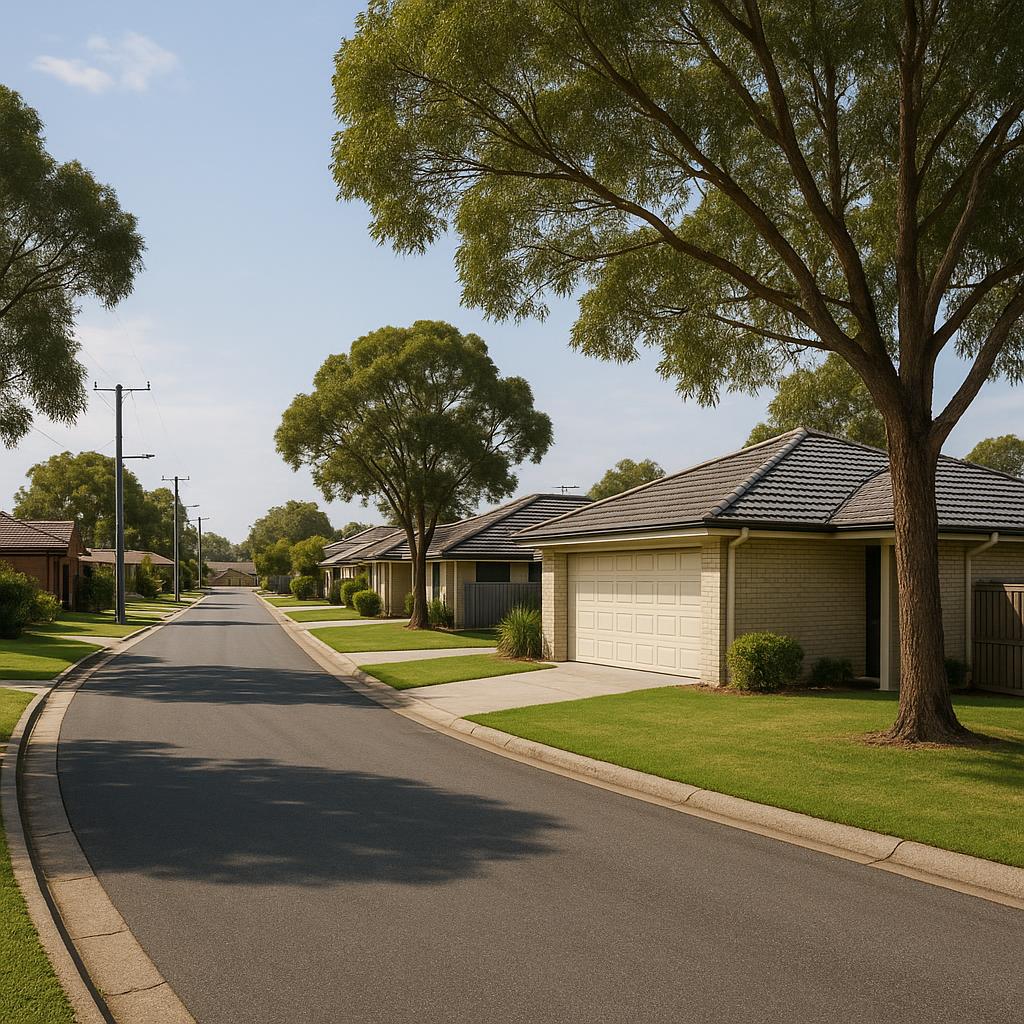
The local housing mix is important for investors and homeowners alike. Detached houses remain the main draw, while pockets of townhouses and units can suit buyers who want lower maintenance or a lower purchase threshold. This creates multiple buyer pathways, but it also means the “right” asset depends heavily on the street, estate quality, and the property’s condition.
Caboolture tends to suit first-home buyers wanting a freestanding home, families needing yard space and practicality, investors targeting broad tenant demand, and buyers who accept commute trade-offs in exchange for value. A useful way to think about the suburb is not “Is Caboolture good?” but “Which pocket and property type best matches my goal?”
Buyer Demand
Demand is usually driven by affordability, family utility, and commuter practicality. That mix can broaden the buyer pool because the suburb can appeal to both owner-occupiers and investors. Broad demand is a positive, but only if the property itself is easy to live in, maintain, and resell.
Homes that are neat, functional, and near practical amenities often attract more interest than similar properties that need immediate work. In Caboolture, buyers commonly pay attention to layout, car accommodation, outdoor space, and how much renovation is left for them to fund after settlement.
Rental Market
The rental market is generally supported by tenants who value affordability, space, and convenience. That often includes families, couples, and workers who want access to transport corridors and everyday services without paying a premium for a more central location.
For investors, the key is not simply chasing rent; it is selecting a property that is easy to lease and inexpensive to hold. A tidy, low-maintenance home with a sensible floorplan and secure parking is often more resilient than a larger but dated property that looks cheaper on day one.
Lifestyle, Transport & Schools
Caboolture offers a practical suburban lifestyle with everyday services, household conveniences, and family-oriented infrastructure. It is typically a suburb for buyers who want function over flair, with enough amenity to support daily life without needing to travel deep into Brisbane for every errand.
Transport access is a major part of the suburb’s appeal. Rail and major road connections can matter a lot here because commute times influence both owner-occupier demand and rental demand. For investors, the transport question is simple: does the property still feel convenient at weekday peak-hour times, not just on a quiet weekend?
School access, childcare, and day-to-day logistics also shape demand. Even buyers who are not currently school-focused often pay for convenience when they can see the practical benefit in future resale. For a family buyer, a slightly smaller home near services can be more valuable than a larger home that complicates the weekly routine.
Caboolture Suburb Profile
Official 2021 Census snapshot for the ABS Suburbs and Localities geography.
Age profile
Housing tenure
Occupied private dwellings by tenure type.
Salary & income profile
Median total income reported in the Census.
*Annual figures are weekly median × 52 estimates, not separate ABS annual medians.
Education & qualifications
Highest educational attainment, people aged 15+.
Employment status
People aged 15+ who reported being in the labour force.
Industry of employment
Top responses among employed people aged 15 years and over.
Occupation profile
Broad occupation groups among employed residents, including managers.
Property Type Guide
- Detached houses: Best for families, upsizers, and investors wanting broad buyer appeal; check condition, drainage, and layout efficiency.
- Townhouses: Suits buyers wanting lower-maintenance living; assess body corporate costs, build quality, and shared-wall privacy.
- Units: Can provide a lower entry point for budget-conscious buyers or investors; inspect building condition and strata rules carefully.
- Renovator homes: Can offer upside if the structure and location are sound; budget realistically for works and holding costs.
- Newer estates: Often appeal to families wanting modern layouts and easier upkeep; compare estate quality, lot size, and future supply risk.
Risks & Watch-Outs
- Flood and drainage exposure should be checked on every shortlisted property, not assumed away by the suburb’s overall appeal.
- Older homes can hide maintenance costs in roofs, plumbing, electrics, and general wear, especially if they have been poorly updated.
- Street-by-street variation is real, so two homes with the same bedroom count can have very different resale outcomes.
- Some properties look cheap because they are cheap to buy, while others are cheap because the buyer must absorb immediate repair or upgrade risk.
- Transport or infrastructure proximity can help convenience, but it may also affect noise, traffic, or long-term liveability.
Nearby Suburbs to Compare
- Morayfield — compare convenience, housing stock, and family appeal.
- North Lakes — compare amenity depth, newer stock, and affordability trade-offs.
- Burpengary — compare commuter practicality and estate style.
- Beerwah — compare space and semi-regional lifestyle characteristics.
- Redcliffe — compare lifestyle premium versus inland value.
FAQ
Is Caboolture a good suburb for first-home buyers?
It can be, particularly for buyers who want a freestanding home and are comfortable with a more practical location. The key is to inspect the pocket, compare transport access, and factor in maintenance, not just the headline purchase price.
Is Caboolture good for property investors?
It can suit investors who want broad tenant appeal and a market where affordability matters. The best results usually come from low-maintenance homes in convenient locations with sensible layouts, because those properties are typically easier to lease and hold.
What property type is usually best in Caboolture?
Detached houses often offer the broadest appeal, especially for families and long-term owners. Townhouses and units can work too, but they require more careful assessment of strata costs, build quality, and the strength of the specific building or complex.
What should buyers check before purchasing in Caboolture?
Check flood and drainage information, recent comparable sales, the condition of the dwelling, and the street’s overall presentation. It is also worth testing commute times and reviewing local amenity access at the times you would actually use them.
How does Caboolture compare with nearby suburbs?
Caboolture usually competes on value, not prestige. Nearby suburbs may offer newer estates, stronger amenity, or different lifestyle characteristics, so the right choice depends on whether your priority is space, convenience, ease of maintenance, or long-term flexibility.
Conclusion
Caboolture is best approached as a suburb of trade-offs: affordability and space on one side, careful pocket selection and due diligence on the other. For the right buyer or investor, it can be a practical and resilient choice. The strongest purchases here usually come from buying fundamentals well, not simply buying cheap.
Sources & how to verify
- Check current sold results and live listings on Domain to confirm whether the home type and pocket you want are actually trading at your expected level.
- Use realestate.com.au to compare current asking prices, property features, and days-on-market signals across Caboolture and nearby suburbs.
- Review zoning, overlays, and local planning controls on the Moreton Bay Regional Council website before assuming a block can be extended, redeveloped, or altered as planned.
- Verify flood and drainage considerations through the relevant council mapping and GIS tools rather than relying on general suburb reputation.
- Confirm school catchments and enrolment details using the Queensland school catchment map or the school itself, because catchments can change and addresses matter.
- Check rail and bus service information on Translink so commute assumptions are based on current timetables, not old estimates.
- Use ABS data to understand broader demographic and dwelling trends, but treat it as context rather than a substitute for current local property evidence.