Quick Answer
Hamilton is one of Brisbane’s most recognisable inner-north suburbs, and it tends to suit buyers who value location, amenity, and long-term scarcity more than bargain entry. For homeowners, the main appeal is lifestyle convenience and prestige. For investors, the attraction is broad tenant interest, but the right building, layout, and holding costs matter far more than the suburb name alone. In Hamilton, due diligence is the difference between a sensible purchase and an expensive one.
Key Takeaways
- Hamilton’s strength is its premium inner-city position, not affordability, so buyers should focus on long-term fit and asset quality.
- Demand is usually strongest for well-located, easy-to-maintain properties with practical layouts, good access, and strong presentation.
- Apartment stock can be attractive, but building quality, body corporate rules, and ongoing costs deserve close scrutiny.
- Owner-occupiers often buy here for convenience and prestige, while investors focus on tenant appeal and holding simplicity.
- Hamilton is best approached as a selective market: two similar-looking properties can have very different outcomes over time.
Pros & Cons
Pros
- Inner-city convenience with strong lifestyle appeal
- Riverside setting and prestige positioning
- Broad tenant interest from professionals and relocation renters
Cons
- Entry costs can be high relative to many Brisbane suburbs
- Apartment ownership can bring body corporate complexity
- Parking, traffic, and access can be limiting in some pockets
Market Overview
Hamilton is an established inner-north Brisbane suburb with a strong reputation for riverside living, convenience, and premium positioning. It attracts a mix of owner-occupiers and investors because the suburb offers a clear lifestyle story and practical access to major employment and amenity nodes. That combination usually keeps attention on the area, even when the broader market is softer.
The local market is best understood as detail-driven rather than generic. In Hamilton, building quality, aspect, parking, noise, and walkability can matter as much as the address itself. A well-designed apartment near amenity may be far more desirable than a larger but awkward property elsewhere in the suburb. Buyers should treat Hamilton as a selection exercise, not a name-recognition exercise.
For investors and homeowners alike, the key question is whether the property suits the intended use over several years. Hamilton generally rewards long-term thinking, especially where the asset is easy to live in, easy to lease, and easy to resell to the next buyer group.
Buyer Demand
Buyer demand in Hamilton is supported by convenience, prestige, and the appeal of low-maintenance living close to the city. That draws professionals, downsizers, relocation buyers, and some families who want an established suburb with strong everyday practicality.
What often separates stronger buyers from weaker ones is not enthusiasm, but clarity. Buyers should be specific about what matters most: floorplan usability, storage, natural light, privacy, parking, and how the property fits future resale. If you want broader Brisbane comparisons, it can also help to review nearby markets such as New Farm QLD Property Market Guide: Buyers & Investors and Ascot as plain-text comparison if no internal page exists.
Rental Market
Hamilton typically appeals to tenants who want convenience, presentation, and a polished suburb identity. Likely renter groups include young professionals, corporate relocators, couples, and long-term renters who prefer a well-connected base with minimal upkeep.
For investors, the critical issue is not simply whether the suburb is desirable, but whether the specific property meets tenant expectations. Easy parking, sensible layouts, security, storage, and low-friction daily living tend to matter more than decorative finishes. Well-located apartments and townhouses usually lease more smoothly than niche or over-customised stock.
Lifestyle, Transport & Schools
Hamilton’s lifestyle appeal comes from its established, high-amenity feel. Buyers are often drawn to dining options, river proximity, and the sense of being close to Brisbane’s core without living in the densest part of it. That makes the suburb appealing to people who want convenience but still prefer a more polished residential environment.
Transport and access are practical advantages, especially for commuters and busy households. Buyers should check weekday travel patterns, parking requirements, and how easy it is to move in and out of the area at peak times. A suburb can feel effortless on inspection day but less convenient during a Monday morning commute.
For schools and family use, buyers should verify current catchments and travel times rather than relying on reputation. Families should consider the real-world routine: drop-offs, after-school logistics, parks, and whether the property type suits long-term living. That approach is more useful than chasing broad claims about “good schools” without checking current boundaries.
Hamilton (Qld) Suburb Profile
Official 2021 Census snapshot for the ABS Suburbs and Localities geography.
Age profile
Housing tenure
Occupied private dwellings by tenure type.
Salary & income profile
Median total income reported in the Census.
*Annual figures are weekly median × 52 estimates, not separate ABS annual medians.
Education & qualifications
Highest educational attainment, people aged 15+.
Employment status
People aged 15+ who reported being in the labour force.
Industry of employment
Top responses among employed people aged 15 years and over.
Occupation profile
Broad occupation groups among employed residents, including managers.
Property Type Guide
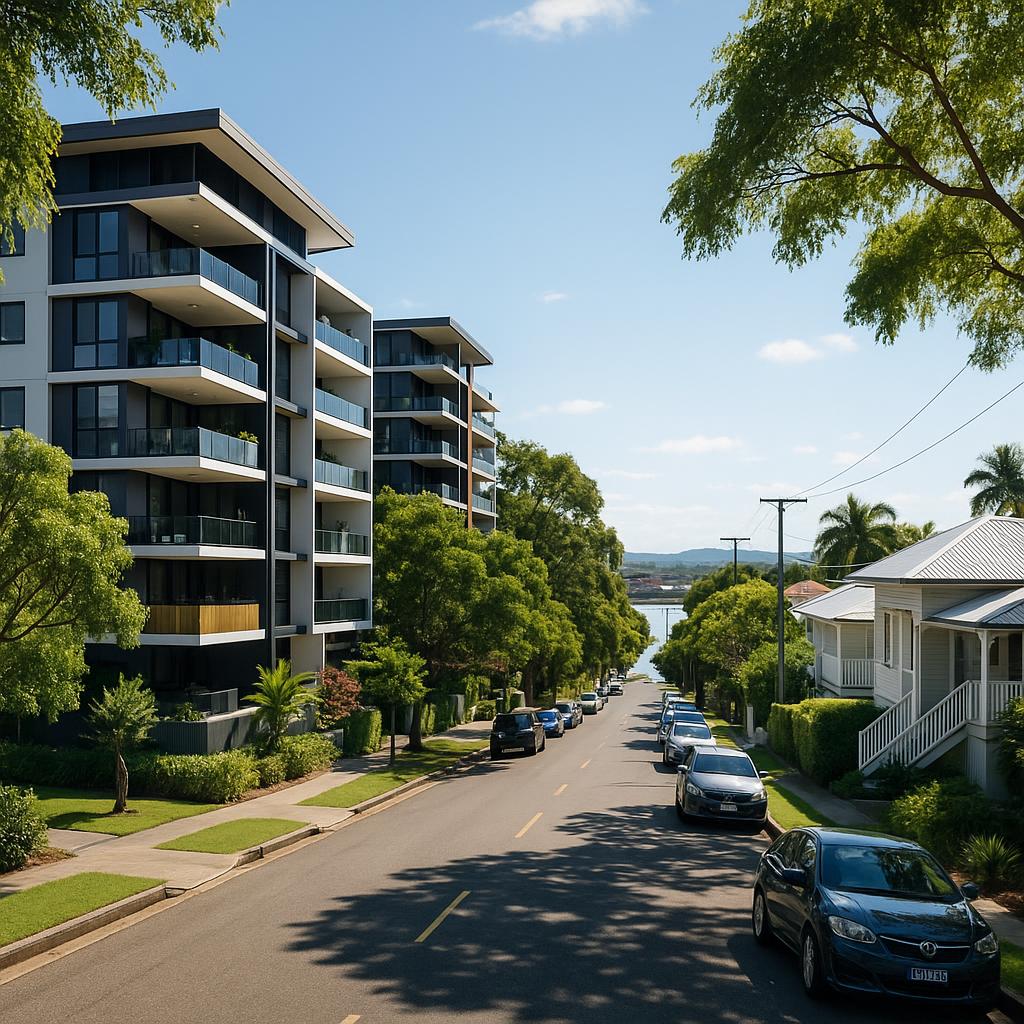
- Apartments: Often the main entry point. Best for low-maintenance buyers and investors, but building quality, body corporate, parking, and layout need careful review.
- Townhouses: A middle-ground option for buyers wanting more space and privacy than an apartment without the maintenance of a full house.
- Houses and character-style stock: Suited to buyers prioritising land, uniqueness, and long-term family holding, though upkeep and renovation quality matter more.
- Best-fit rule: Match the asset to your strategy—liveability, rental simplicity, or long-term family use—rather than buying the most attractive façade.
Risks & Watch-Outs
- Do not pay for the suburb name alone; compare the actual property against alternatives in nearby lifestyle corridors.
- Apartment buyers should read disclosure documents carefully, especially for body corporate costs, rules, and maintenance history.
- Layouts that look stylish online can still be awkward to live in or lease, so test functionality in person.
- Parking, access, traffic, and noise can have a bigger impact on resale and rental appeal than many buyers expect.
- Assume property performance will vary by building and micro-location, not just by suburb brand.
Nearby Suburbs to Compare
- New Farm QLD Property Market Guide: Buyers & Investors
- Fortitude Valley QLD Property Market Guide: Buyers & Investors
- Kangaroo Point QLD Property Market Guide: Buyers & Investors
- Ascot
- Albion
- Nundah QLD Property Market Guide: Buyers & Investors
FAQ
Is Hamilton a good suburb for first-home buyers?
It can be, but mostly through apartments or smaller, well-chosen stock. First-home buyers should be realistic about competition, holding costs, and suitability. The best purchase is usually one that balances entry price, liveability, and future resale rather than chasing the biggest floor area.
Is Hamilton better for owner-occupiers or investors?
Both can do well, but the winning strategy depends on the property type. Owner-occupiers tend to value convenience, lifestyle, and long-term comfort. Investors should prioritise leaseability, maintenance, and tenant fit. The right asset can serve either strategy, but not always both equally well.
What property type works best in Hamilton?
There is no single best type. Apartments can suit investors and busy professionals, while townhouses and houses can better suit buyers wanting more space or longer-term family use. The real test is whether the property suits your holding period, budget, and maintenance tolerance.
What should I check before buying in Hamilton?
Focus on building quality, layout practicality, parking, storage, light, noise, body corporate obligations, and access. If buying to live in, test the daily routine: commuting, groceries, visitors, and liveability. If investing, check whether the property is easy to explain to the next tenant.
How does Hamilton compare with nearby inner-north suburbs?
Hamilton is often chosen for its established prestige and convenience. Nearby suburbs may offer different trade-offs, such as stronger apartment focus, different price positioning, or a different lifestyle feel. Compare the actual property quality, not just the suburb reputation, before deciding.
Conclusion
Hamilton is a premium Brisbane suburb that appeals to buyers who want convenience, lifestyle, and long-term scarcity in a recognisable inner-north location. It can work well for both homeowners and investors, but success depends on choosing the right property type, building, and micro-location. In Hamilton, careful selection matters more than broad suburb hype.
Sources & how to verify
- Check current suburb planning and local context on Brisbane City Council so you can confirm zoning, overlays, and any nearby works that may affect the property.
- Use Queensland Government resources to verify property, planning, and infrastructure information before relying on marketing claims.
- Confirm school catchments and enrolment rules through Queensland school finder rather than assuming a property sits in a desired zone.
- Review current sales and rental listings on Domain to compare the property against live market behaviour, not outdated headline figures.
- Cross-check comparable sold data on realestate.com.au so you can see how similar properties are actually positioned and presented.
- If the property is in a strata complex, read body corporate documents carefully and verify levies, sinking fund health, and by-laws before making an offer.
- Inspect the property at different times of day, because noise, traffic, parking, and aspect can change materially between a quiet morning and a busy weekday evening.
- Use multiple current sources together, because no single website can fully confirm price, demand, access, or liveability for a specific Hamilton property.